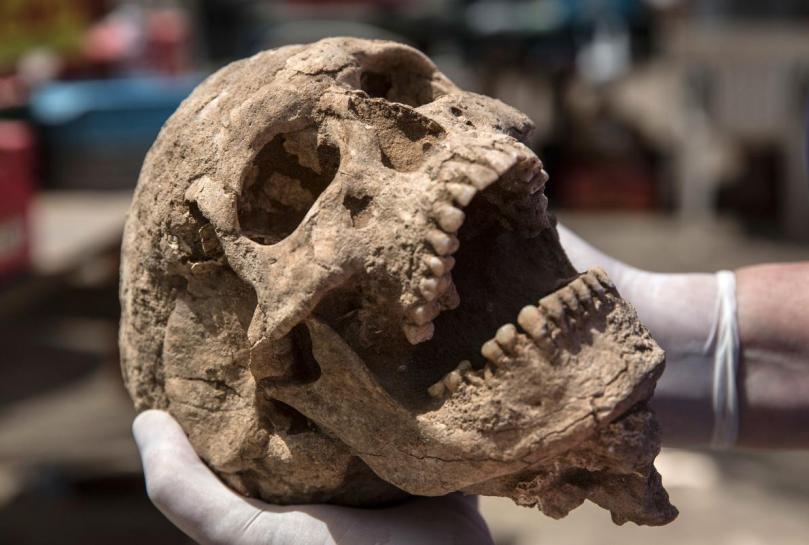
An unprecedented find in southern Israel may finally reveal the origins of one of the Hebrew Bible’s greatest villains.
CHR Comment: The discussion of the Philistines has played a significant role in modern criticism of the Bible and church controversies about it. Critics have questioned the Bible’s accuracy since Genesis 21 and 26 refers to “Philistines” at the time of the Patriarchs while many critical scholars consider the settlement of the Philistines to be a much later development. The newly discovered cemetery dates between the eleventh and eighth centuries BC. In other words, from the time of the Judges to the time of King Hezekiah/Prophet Isaiah, according to traditional biblical chronology. This would be long after Moses wrote Genesis. However, as the article mentions, there were earlier movements of “Sea Peoples” who were described in Egyptian documents. Moses may have referred to one of these earlier groups from patriarchal times.
The “Philistines” in Genesis may be Sea Peoples, who were culturally related to the Philistines. The name “Phicol” in Genesis 21:22 is neither Hebrew nor Egyptian and may be a name or title used by people from the Aegean or Asia Minor. The use of the word “Philistine” in Genesis could represent an editorial update of the name for the location. A scribe working on Genesis may have called the place/people by the familiar name used in his day. Just such an updating of a place name is know from Genesis 14:14 where the Canaanite city of Laish is called by its later name, “Dan.” Consider how writers describing the “Promised Land” have changed the name of the region, which is called Canaan, Israel, Palestine, and perhaps other things by other cultures. (E.g., the Egyptian story of Sinuhe titles the region as Retjenu in c. 1960 BC, around the time of the Patriarchs.) Which title you use can depend on your audience and what you are describing. There is evidence of trade between Mediterranean people and those dwelling in Canaan/Israel from an early date and perhaps these traders are associated with the later Philistines. Archaeologists have yet to discover the settlements for these earlier foreign traders but, as the National Geographic article points out, they are just discovering a Philistine cemetery for the first time!
An exciting feature of the discovery is that scientists may now do DNA analysis of the Philistines and perhaps get a better picture of where they came from.
Source: Discovery of Philistine Cemetery May Solve Biblical Mystery
 church history review