A Rabbi’s Quest to Show Christians the Jewishness of Jesus

Rabbi Evan Moffic explores the cultural and religious world of Jesus the Jew, offering Christians (and Jews) a new perspective on Jesus’ life and teachings in his book, ‘What Every Christian Needs to Know About The Jewishness of Jesus.’

CHR Comment: The interview with Rabbi Moffic explores why he wrote this book about Jesus as a Jew. Moffic likens the Jewishness of Jesus to Rabbinic, Talmudic Judaism rather than the Judaism described in the Old Testament.

An issue with Moffic’s thesis is that the Talmud was written down several centuries after the time of Jesus though it likely includes comments from Rabbis of an earlier era. A Jewish text that is closer in time to the ministry of Jesus is the Mishnah, written down in the early third century AD. The Babylonian Talmud and Jerusalem Talmud act like commentaries on the Mishnah. The Rabbinic tradition likely reflects the religious views of the Pharisees and their legacy.

Source: A Rabbi’s Quest to Show Christians the Jewishness of Jesus

India: 12 Arrested for “Converting to Christianity”

Twelve people have been accused of converting to Christianity, arrested and put in jail in India, according to UCA news.

CHR Comment: Hindu activists surrounded a house in Dahar village, Madhya Pradesh, India. Inside were twelve persons suspected of converting to Christianity. In this region of India, it is illegal to convert without informing the government, which is run by conservative Hindus. Local police arrested the twelve people and took them to jail on January 14, 2016. They were later released on paying bail.

Shankar Singh, who spoke for those arrested, explained that they had not converted to Christianity and had gathered to observe a Hindu harvest festival that coincides with the transition of the sun into the zodiac sign of Capricorn (Makarsankrati). However, he added that the group had faith in Jesus, followed His teachings, and prayed to Him even though they had not joined any Christian church.

In regions where Christianity is new and in the minority, the issue of what makes for a genuine conversion is common. Augustine records an example of this same issue in his Confessions by relating the story of Victorinus, a famous Roman teacher of rhetoric who read Christian books. Victorinus confessed to his friend Simplicianus that he had become a Christian. But Simplicianus contended that he would not agree that Victorinus was a Christian until he saw him at church, to which Victorinus cleverly replied, “Then do walls make Christians?” (Confessions: A New Translation by Henry Chadwick [Oxford: Oxford University Press, 1992], 136). Victorinus was afraid to make a public confession of Christ due to the social pressures of the pagan society that surrounded him and celebrated his talents. A public conversion would bring down upon him the scorn of the dominant religious culture.

The followers of Jesus in Dahar village are having a similar experience. They have learned about Jesus and want to follow Him but know that formally converting to Christianity will have great personal costs. May the Lord help them and other Christians in the region work through these matters of conversion safely and sincerely. In closing, we may remember that Victorinus finally asked Simplicianus to take him to church where he received formal instruction in the Christian faith and Baptism.


Source: India: 12 arrested for ‘converting to Christianity’ | Christian News on Christian Today

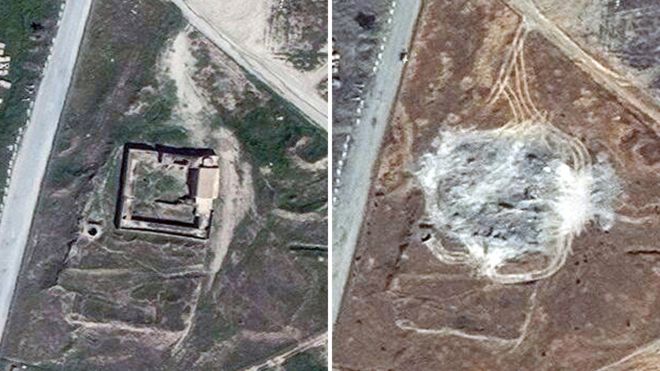
Iraq’s Oldest Christian Monastery Destroyed by Islamic State

Satellite images confirm the oldest Christian monastery in Iraq has been destroyed by the jihadist group Islamic State (IS).

CHR Comment: St. Elijah’s monastery was 1,400 years old. The article describes some features of its cultural significance, the martyrs there from 1743, and use of the monastery by military groups in recent fighting. The article is based on an interview with a Chaldean priest since the Chaldeans were the last Christian group associated with the site. None of the articles I saw included much information about St. Elijah himself. If a reader is aware of further information on this Syriac Christian leader, please share comments and/or a link.

This is yet another example of how ISIS practices vandalism in the name of religion, as though an unused site was somehow a threat to them.

Source: Iraq’s oldest Christian monastery destroyed by Islamic State – BBC News

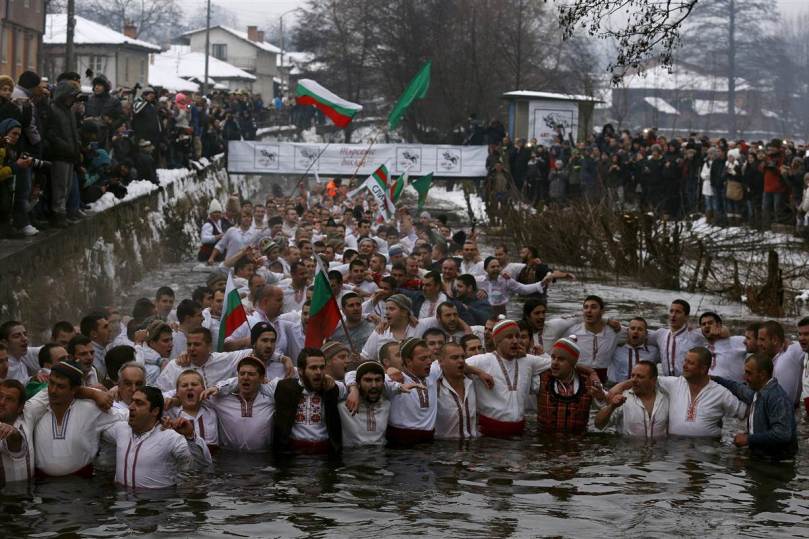
Epiphany Celebrations around the World

CHR Comment: Christians today celebrate the Epiphany of Jesus Christ, added to the calendar by the Early Church. The name of the feast comes from a Greek word meaning “Make manifest.” The celebration includes different events from Jesus’ life such as the following:

Visitation of the Magi, the first Gentiles to worship the child Jesus. Matthew 2 records their visit, which did not take place on the night Jesus was born but up to two years afterward while Joseph and Mary were living in a house at Bethlehem rather than a stable. Christians in the western tradition often commemorate this event, emphasizing Christ’s mission to save all nations. The Christmas tradition of giving gifts also comes from this biblical event since the Magi brought gifts to Jesus.

Baptism of Jesus. All four Gospels in the New Testament record when the Holy Spirit descended upon Jesus as He stood in the Jordan River, consecrating Baptism as a Christian practice and demonstrating its importance for the Christian life. Christians in the eastern tradition often commemorate Epiphany by emphasizing Baptism.

Miracles, such as turning water into wine. A third Epiphany theme is based on John 2 and other passages where Jesus performs miracles or “signs” as John the evangelist called them. Jesus’ miracles showed that He was more than an ordinary human being. He was God manifested in the flesh, the Messiah and Savior. All three Epiphany themes are wonderfully commemorated in an English hymn by Christopher Wordsworth (1807-85), “Songs of Thankfulness and Praise.” Each stanza ends with, “God in man made manifest.”

Included below are links to news stories that describe different local Epiphany practices. In Bulgaria, Eastern Orthodox Christians dance in an icy river. Italian parents put gifts of candy in the shoes of children. In Poland, Spain, and former Spanish colonies, there are Epiphany parades. Christians generally commemorate the feast with a special service on January 6 or the nearest Sunday. The Epiphany season reaches a high point on Transfiguration Sunday and ends on Ash Wednesday, the beginning of the Lenten fast.

Our family plans to watch The Nativity Story tonight, which includes biblical and legendary portrayals of the Magi visiting the Holy Family (New Line, 2006). We will also have special prayers together, rejoicing that God became man for us and for our salvation.

Blessed Epiphany!

Source: Bulgarians Dip Into Icy River to Celebrate Epiphany Day – NBC News

Epiphany in Italy and Elsewhere

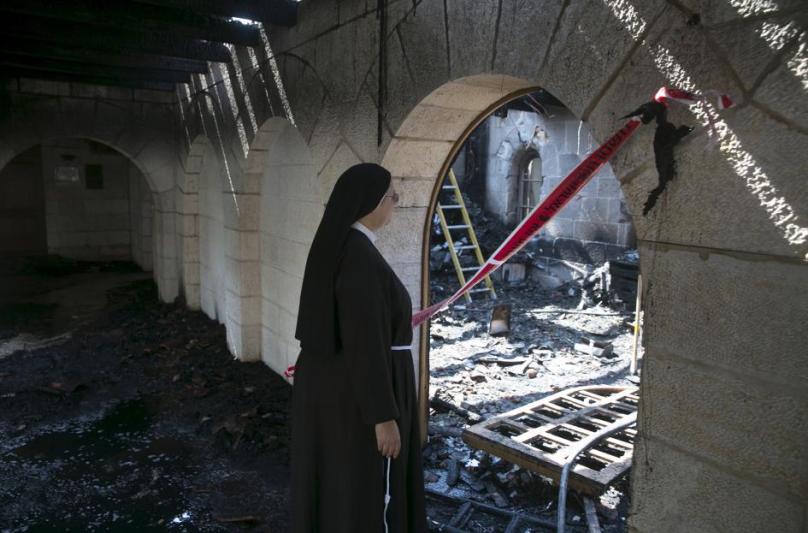
Church of the Multiplication Burned by Jewish Terrorists

Assaults on churches by right-wing Jews, a new phenomenon, raise concern about movement’s increasingly aggressive tactics.

CHR Comment: The Church of the Multiplication is built over an ancient site associated with Jesus’ miracle of multiplying bread and fish to feed hungry crowds. It is the third church burned by Jewish terrorists who, spurred on by some rabbis, regard Christians as idolaters that must be driven from the Holy Land. According to the National Geographic article, young Jewish terrorists are adopting tactics against Christians that Jews and Muslims have used against one another for many years.

Source: Jewish Extremists’ Attacks Rattle Christians in Holy Land

Winter Solstice and the Date of Christmas

From astronomy to religion, the year’s shortest day brings enduring mysteries.

CHR Comment: National Geographic briefly describes two theories about the relationship between the winter solstice and the date of Christmas. A prevailing view is that Christians chose December 25 as the date to celebrate Jesus’ birth to offer a Christian alternative to celebrating the pagan Sol Invictus (Unconquered Sun) holiday that was timed with the winter solstice, the shortest day of the year. A more common Christian explanation is that the day was chosen since it is nine months after the day when the angel Gabriel announced to Mary that she would miraculously have a child who would be the Savior (Annunciation Day, March 25; Luke 1:26-37).

Source: Everything You Need to Know About the Winter Solstice

Evangelical Preacher on Trial after Branding Islam ‘Satanic’

An evangelical preacher from Northern Ireland who branded Islam satanic has been charged with spreading a “grossly offensive” message.

CHR Comment: Although one might agree that Rev. James McConnell’s comments are offensive, many Christians have held that other religions and religious people’s activities stem from Satan misleading people. In fact, this would be a common theological argument against groups viewed as teaching falsely. The New Testament also includes such statements (e.g., Acts 5:3; 26:18).

Source: Evangelical preacher on trial after branding Islam ‘satanic’ – The Washington Post

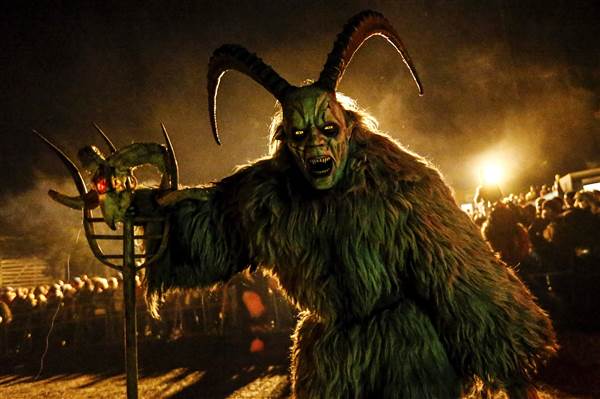
St. Nicholas for Nice Children; Krampus for Naughty

The integration of Syrian and Iraqi refugees in rural Austria is facing a terrifying challenge this holiday season.

CHR Comment: Sometime in the medieval era the Christian feast for St. Nicholas, a historical fourth century bishop, was mixed with pagan folklore about a humanlike beast that punished naughty children. This is the Austrian version of the “naughty or nice” element in modern Christmas celebrations. This a good example of syncretism in European Christianity.

Source: Austrian Villagers to Refugees: Please Don’t Fear Krampus – NBC News

Ancient Greek Citadel Discovered under Jerusalem Car Park

Israel’s antiquities body claimed Tuesday to have solved “one of Jerusalem’s greatest archaeological mysteries” by unearthing an ancient Greek citadel — the Acra — buried under a car park.

CHR Comment: The citadel built by Antiochus IV Epiphanes during the time between the testaments was likely buried when the Romans destroyed Jerusalem in 70 AD.

Source: ‘Ancient Greek citadel’ discovered under Jerusalem car park