John Granger Cook’s Crucifixion in the Mediterranean World supersedes Martin Hengel’s work on this topic so important to classical, biblical, and early Christian history.
Review of Biblical Literature.

John Granger Cook’s Crucifixion in the Mediterranean World supersedes Martin Hengel’s work on this topic so important to classical, biblical, and early Christian history.
Review of Biblical Literature.
Andrew Crislip describes the views of early Christians, some of whom viewed health as a sign of holiness while others viewed illness as a spiritual discipline that led to deeper holiness. He cites writers from the fourth through the sixth centuries and comments especially on monastic practices. Review of Biblical Literature.

This link takes you to a description of the Acts Seminar, which is a critical study group similar to the Jesus Seminar that became famous for voting on whether or not they believed that Jesus actually said something recorded in the Gospels.
These seminars are examples of subjective, critical scholarship using the tools of democracy to foster agreement among themselves. They usually date events late, pushing Christian beginnings into the second century. They are a remnant of earlier critics whose views were reined in by the influence of archaeology. The page also includes a link to a review.
Review of Biblical Literature.

Maxwell has completed the second volume from Cyril, an important figure in early Christian discussion of the doctrine of Christ.
Concordia Theology » David Maxwell’s New Translation of Cyril’s Commentary on John.
In 2012 this purported fragment of a Coptic manuscript made headlines because in the text Jesus referred to “My wife.” Yale professors now conclude that it is a forgery. The article explains how they have reached that conclusion.
Why would a forger create this so-called Gospel? Likely motives include issues of women’s rights in the church such as the recent decision of the Church of England to ordain women bishops.
New clues cast doubt on ‘Gospel of Jesus’ Wife’ – CNN.com.

Four volumes are now available in this new series, which draws texts from early Christian writers to prepare a commentary. The Patte review on this page is from a critical scholar, who finds this historical approach unappealing. Church historians should find this series and the Ancient Christian Commentary series very helpful for exploring the history of biblical interpretation, which drives theology.
Review of Biblical Literature.

This article describes some aspects of Christian belief about Christ’s descent into hell, which is of course in creeds widely recited in Christian worship. An aspect missing in the article is that although some Christians teach that Jesus descended into hell to suffer, others teach that Jesus descended into hell triumphantly to proclaim His victory over sin, death, and the power of the devil.
1 Peter 3:18-20
For Christ also suffered once for sins, the righteous for the unrighteous, that he might bring us to God, being put to death in the flesh but made alive in the spirit, in which he went and proclaimed to the spirits in prison . . .
Jesus Went to Hell, But Nobody Wants to Talk About It | Religion Dispatches.

This article illustrates how the Byzantines responded to the Islamic invasions. Looking forward to learning more about the art used in these underground chapels.
Massive Underground City Found in Cappadocia Region of Turkey.

Photos and descriptions of various Easter traditions from the name of the holiday to its modern celebration.
5 Things You Didn’t Know About Easter.

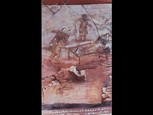
These depictions of Jesus provide a pretty good overview. However, when the article asserts that Jesus was not depicted with a beard until the fourth century, I would question that conclusion. The fresco at Dura Europos (second image) might have included a beard on Jesus’ chin. The state of the image makes it difficult to tell. Other early depictions borrowed from existing Greco-Roman depictions of gods or heroes (think stock art), who typically did not have beards. So the evidence is not quite so helpful for determining how to depict Jesus.
Isaiah 50:6 speaks prophetically about Jesus’ suffering and describes Him as bearded. That prophecy may have helped settle early Christian depictions that became standard in later centuries. It would be interesting to research the history of interpretation for Isaiah 50. That Jesus was of Jewish descent is beyond dispute.
The Evolving Look of Jesus – Killing Jesus Gallery – National Geographic Channel.
 church history review