Conscience and the Legal Fight over Religious Liberty

The religious right of conscience was once a powerful legal idea. But when weighed against the right for equal treatment in recent gay rights cases, it has consistently lost ground. Part 3 of seven.

CHR Comment: This is an interesting reflection upon current inconsistencies in American law and its application with respect to religious liberty and the right not to violate one’s conscience. It illustrates why this issue continues to be discussed and must be sorted out.

Source: Behind legal fight over religious liberty, a question of conscience – CSMonitor.com

Christian Mother of 7 Hacked to Death in Nigeria While Preaching

A Christian mother of seven was hacked to death by suspected Muslim radicals in Nigeria and her mutilated body was discovered in a pool of blood along with a Bible and megaphone she used to preach every morning.

CHR Comment: This is a strange story. Would it be normal for someone to preach with a megaphone at 5 AM? Could the motive for the killing extend to anger over the noise so early in the morning?

Eunice Olawale was a minister at Redeemed Christian Church.

Source: Christian Mother of 7 Hacked to Death in Nigeria While Preaching

Pakistani Christian Accused of Blasphemy for Online Poem

The man is accused of sending a poem that insults Islam to a friend online.

CHR Comment: Pakistan has strict blasphemy laws. The article describes several examples of the law used against Christians, some of which may be based on false charges. However, a Muslim sect in Pakistan has suffered most from accusations of blasphemy.

Source: Police in Pakistan hunt Christian accused of blasphemy for online poem – The Washington Post

Pentecostal Pastor in Zimbabwe Is Arrested

The activism of the Rev. Evan Mawarire, who organized the country’s largest protests in a decade, has galvanized public outrage over the president’s rule.

CHR Comment: Pres. Mugabe, a longstanding controversial figure, is 92 years old and near the end of his career. Rev. Mawarire was making an effort to hasten the end.

Source: Pastor in Zimbabwe Is Arrested as Anger Toward Robert Mugabe Builds – The New York Times

Kirk Franklin Making “God Famous” and Dodging “Rocks”

“These are shaky times,” says Christian gospel, R&B, rap, pop, and hip-hop artist Kirk Franklin. “I’m praying and hoping maybe one thing that I’ve said, from somebody who came from nothing, could maybe still give just a little bit of hope that it can get better.” More →

CHR Comment: This interview describes the career of Evangelical Gospel artist Kirk Franklin, his place at the edge of Christian music, and his welcome to the center through the Billy Graham crusades and the first platinum Gospel album. Franklin was raised Baptist.

Source: Kirk Franklin | July 8, 2016 | Religion & Ethics NewsWeekly | PBS

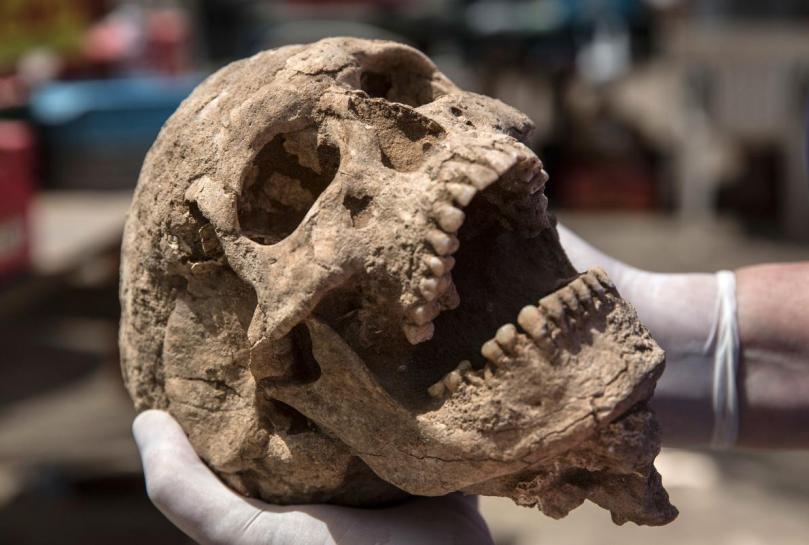
Discovery of Philistine Cemetery May Solve Biblical Mystery

An unprecedented find in southern Israel may finally reveal the origins of one of the Hebrew Bible’s greatest villains.

CHR Comment: The discussion of the Philistines has played a significant role in modern criticism of the Bible and church controversies about it. Critics have questioned the Bible’s accuracy since Genesis 21 and 26 refers to “Philistines” at the time of the Patriarchs while many critical scholars consider the settlement of the Philistines to be a much later development. The newly discovered cemetery dates between the eleventh and eighth centuries BC. In other words, from the time of the Judges to the time of King Hezekiah/Prophet Isaiah, according to traditional biblical chronology. This  would be long after Moses wrote Genesis. However, as the article mentions, there were earlier movements of “Sea Peoples” who were described in Egyptian documents. Moses may have referred to one of these earlier groups from patriarchal times.

The “Philistines” in Genesis may be Sea Peoples, who were culturally related to the Philistines. The name “Phicol” in Genesis 21:22 is neither Hebrew nor Egyptian and may be a name or title used by people from the Aegean or Asia Minor. The use of the word “Philistine” in Genesis could represent an editorial update of the name for the location. A scribe working on Genesis may have called the place/people by the familiar name used in his day. Just such an updating of a place name is know from Genesis 14:14 where the Canaanite city of Laish is called by its later name, “Dan.” Consider how writers describing the “Promised Land” have changed the name of the region, which is called Canaan, Israel, Palestine, and perhaps other things by other cultures. (E.g., the Egyptian story of Sinuhe titles the region as Retjenu in c. 1960 BC, around the time of the Patriarchs.) Which title you use can depend on your audience and what you are describing. There is evidence of trade between Mediterranean people and those dwelling in Canaan/Israel from an early date and perhaps these traders are associated with the later Philistines. Archaeologists have yet to discover the settlements for these earlier foreign traders but, as the National Geographic article points out, they are just discovering a Philistine cemetery for the first time!

An exciting feature of the discovery is that scientists may now do DNA analysis of the Philistines and perhaps get a better picture of where they came from.

Source: Discovery of Philistine Cemetery May Solve Biblical Mystery

Di-ver-si-ty: Overcoming Homogeneity in Our Churches

Racial diversity in local churches is a preview of eternity.

CHR Comment: Given Robert P. Jones new book on White Protestantism, this essay by Stetzer is an interesting piece to read from a leader in the Southern Baptist Convention. I especially like the visual with different crayons all labeled “flesh” tone, which is very clever.

Source: Di-ver-si-ty: Overcoming Homogeneity in Our Churches | The Exchange | A Blog by Ed Stetzer