 Persecution of Christians in Africa and Asia was the most significant global story in 2015. Examples of martyrdom and persecution appeared throughout the year, coupled with reports about immigration, terrorism, and the demographic growth of Islam. Details about these events and many others are below.
Chinese Christians’ Setbacks and Opportunities
About 400 churches in China were partially or completely demolished when authorities designated them as illegal structures (Tom Phillips, London Daily Telegraph, March 25, 2015). Pastor Huang Yizi was sentenced to a year in jail for publically opposing the demolitions. The Chinese government recognizes three official Christian organizations: the Three-Self Patriotic Movement, China Christian Council, and Chinese Patriotic Catholic Association. House churches are illegal.
The last official Roman Catholic bishop of the Yicheng diocese (Hebei province) died in incarceration (Brice Pedroletti, Le Monde, June 8, 2015). Government police had abducted Bishop Monsignor Come Shi Enxiang and two other bishops in this Catholic area of China because the bishops would not take membership in the Chinese Patriotic Catholic Association. The three bishops were ordained as priests before China became communist in 1949. According to the report, villagers at Cunmoyu were awaiting opportunity to bury Bishop Shi who went missing in 2001.
In contrast, the Russian Orthodox Church ordained its first Chinese priest in 60 years, perhaps signaling new ties between China and Russia (Hannah Gardner, USA Today, October 22, 2015). Yu Shi’s ordination took place at a seminary in St. Petersburg. The priest will serve in Hardin. Adherents to Orthodoxy in China number in the thousands, including descendants of the Albazinian Cossacks who settled in China in the seventeenth century.
Ecumenical Apologies
In November 2015, the Global Christian Forum met in Albania, hosting 145 representatives from the World Evangelical Alliance, Pentecostal World Fellowship, the Vatican, and the World Council of Churches (Sarah Eekhoff Zylstra, Christianity Today, December 18, 2015). Together the delegates represented church bodies with membership numbering about two billion Christians. The theme of the conference was “Following Christ Together,” which sought to foster greater ecumenical cooperation during these difficult times of persecution. A press release from the meeting acknowledged that Christians persecuted one another as well as other religious persons. Forgiveness is the doctrine and practice by which the church stands or fails, making this a significant event.
Gay Marriage Approved in Ireland and United States
On May 22, Irish voters approved a referendum that allowed gay marriages. 62% of voters approved the measure despite opposition from the Roman Catholic Church. Ireland had only recently decriminalized homosexuality in 1993. Reporters Danny Hakim and Douglas Dalby wrote that the Catholic Church had lost credibility in recent years due to scandals and due to changing attitudes among younger Irish citizens (New York Times, May 23, 2015).
On June 26, the United States Supreme Court declared gay marriages legal throughout the nation in a close vote of five to four. Such marriages were already legalized in 37 states and Washington DC (Dana Liebelson and Amanda Terkel, Huffington Post, June 26, 2015). Conservative Christians opposed the changes and are questioning whether to divide civil and church roles more sharply by having couples marry in a civil ceremony before coming to the church for blessing. Christian institutions wrestled with policy changes due to the new law (Jeremy Weber, Christianity Today, September 21, 2015).
Interfaith and Interreligious Services Increase
In a year observing the fiftieth anniversary of the papal document Nostra Aetate (“In our time”), which fostered dialogue between Jews and Roman Catholics (Ron Kronish, Huffington Post Religion Blog, October 28, 2015), the news presented numerous stories referring to interfaith or interreligious services or dialogues. For example, on March 6, St. John’s Waterloo in London (Anglican) hosted a Muslim prayer service. Conservatives, such as Rev. Canon Phil Ashley of the American Anglican Council, soon questioned the decision (Current News, americananglican.org, March 2015). On March 18, Canon Giles Goddard apologized for hosting the service (Madeleine Davies, Church Times, March 18, 2015). Later in the year, Till-R. Stoldt reported about the policy document of Barbara Rudolph, head of the Ecumenical Department for the Rheinland region of the Protestant Church in Germany (Die Welt, October 15, 2015). Rudolph’s policy would prevent mission work of Christians among Muslims. On October 29, The Gulen Movement made headlines because it secretly funded hundreds of trips for U.S. Congressmen or their staff members (Paul Singer and Paulina Firozi, USA Today, October 29, 2015). The movement also sponsors interfaith talks with Christian, Jews, and Muslim groups. Although the group is openly committed to peaceful relations, its secretive practices are undermined trust. On November 1, Episcopal Presiding Bishop Michael Curry was installed during a service with ecumenical participants (other Christians) and also interfaith participants (other religions; Aaron Morrison, International Business Times, November 1, 2015). On November 4, Greek Orthodox, Catholic, and Muslim clergy held an interfaith service on the island of Lesbos to remember refugees who drowned in the Mediterranean Sea (Jeanne Carstensen, Public Radio International, November 3, 2015).
Muslim Migrants Converting to Christianity in Germany
A growing number of Muslim immigrants in Germany are converting to Christianity according to Kirsten Grieshaber (Associated Press, September 4, 2015) in an article describing the Baptism of an Iranian at the evangelical Trinity Church in Berlin. The converts are mostly from Iran and Afghanistan and are seeking asylum in Germany. Skeptics question whether the conversions are sincere or are meant to prevent deportation of those baptized to their Muslim homelands. This is one of many stories about the flood of immigrants headed into Europe from Asia and Africa.
Persecution of Christians in Africa and Asia
On January 3, Boko Haram, whose name means “Western education is forbidden,” attacked the Nigerian village of Baga (Monica Mark, The Guardian, January 10, 2015). This was among the first of many attacks by the Jihadist group in 2015, which wants to establish an Islamic state. According to the Global Terrorism Index, Boko Haram was responsible for 6,644 deaths in 2014, making them the most deadly terrorist group. Nigeria is commonly described as Muslim in the north and Christian in the south but adherents of both religions are found throughout the country. At Baga, which is in the north east, militants burned the community’s churches (Stoyan Zaimov, Christian Post, January 9, 2015). More than 2,000 people were killed. Some were Christians, though perhaps not all were Christians since Boko Haram also attacks other Muslim groups. Religious, ethnic, and political differences stand behind the fighting in the country (Tolu Ogunlesi, New York Times, March 23, 2015).
On February 15, the Islamic State (ISIS) released a video showing the decapitation of 21 Coptic Christians whom they had captured in Libya. The Copts were apparently kidnapped the month before and executed for religious and propaganda purposes according to a Voice of the Martyrs post (March 18, 2015). In April a mob attacked a church in Al Our where Christians proposed to build a new church in memory of the martyrs (Steven Edwards, Fox News, April 16, 2015). Thirteen of the ISIS victims were from Al Our.
In late February, Islamic State gunmen took at least 70 Christians and other persons captive in northeastern Syria (Associated Press, February 24, 2015). The ISIS organization also destroyed churches and the shrines of non-Sunni Muslims. They especially targeted Yazidi people, whom they regard as heretics. In March, ISIS supporters tore down the crosses that topped Christian churches in Iraq (Clyde Hughes, NewsMax, March 17, 2015). Assyrian Christians experienced much of the persecution. In November, an Aid to the Church in Need representative predicted that the c. 260,000 Christians in the region could be martyred or forced to emigrate if the ISIS Caliphate continues to grow (Fox News, October 23, 2015). However, regional opposition to ISIS is gaining strength. For example, Christian troops were among those who participated in the liberation of Hol, Syria. They were part of the Democratic Forces of Syria, which formed in mid-October, 2015 (Susannah George, Associated Press, November 13, 2015). An ISIS attack in Paris, though not directed specifically at Christians, drove Parisians back to church as they struggled to discern why God was allowing such violence (Sarah Miller Llana and Jason Walsh, Christian Science Monitor, November 15, 2015). Western states now show growing resolve to defeat the terror group, which sees itself in a crusade-like struggle (Jason Bacon, USA Today, November 19, 2015). There is no clear count of how many people ISIS has killed worldwide.
On April 2, seven Al-shabaab Islamic terrorists attacked Christian students at Garissa University in Kenya (Tonny Onyulo, USA Today, April 2, 2015). The gunmen held hostages for 15 hours and killed 148 people. For staging their attacks, the terrorists used the Dadaab refugee camp, which is the world’s largest refugee camp, populated with 350,000 Somalis (Tonny Onyulo, USA Today, May 2, 2015). On April 5, Easter Sunday, Our Lady of Consolation Church held a memorial service for those killed (Associated Press, April 5, 2015). Armed security guards surrounded the worshippers.
Polish Election Influenced by Conservative Catholics
In October the conservative Law and Justice Party won 235 seats out of 460 in Poland’s lower house of parliament as well as a majority in the senate (Monika Scislowska, Associated Press, October 27, 2015). Roman Catholic views are an important influence for Law and Justice. 90% of Poles are Roman Catholic and, unlike other nations in Europe, 40% of poles attend church weekly (Tom Heneghan, Reuters, October 29, 2015).
Synod on the Family
From October 4–25, the Vatican hosted a Synod of Bishops on the Family that erupted in controversy due to topics such as allowing divorced Catholics to receive communion and becoming more welcoming toward homosexuals. On October 3 Monsignor Krzysztof Charamsa, a Polish priest working at the Congregation for the Doctrine of the Faith, declared his homosexuality openly in an effort to influence the synod (Yamiche Alcindor, USA Today, October 3, 2015). Also, early synod drafts of a statement about homosexuality appeared to change the church’s teaching on homosexuality. However, observers noted the growing influence of African bishops who spoke strongly against changing the church’s teaching on homosexuality (Daniel Gibson, Religion News Service, October 25, 2015). In the end, the synod adopted a more traditional and conservative statement. Charamsa was removed from the priesthood (Rosie Scammell, Religion News Service, November 12, 2015).
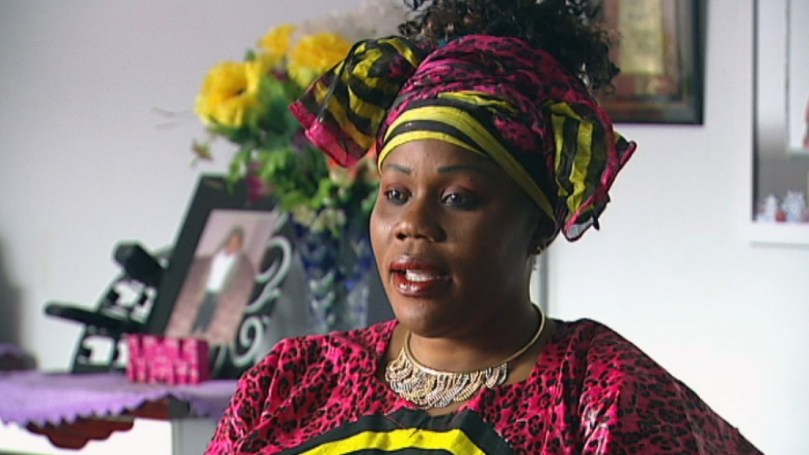 “Surprise,” she said. “I’m still alive.” Now he’s in jail.

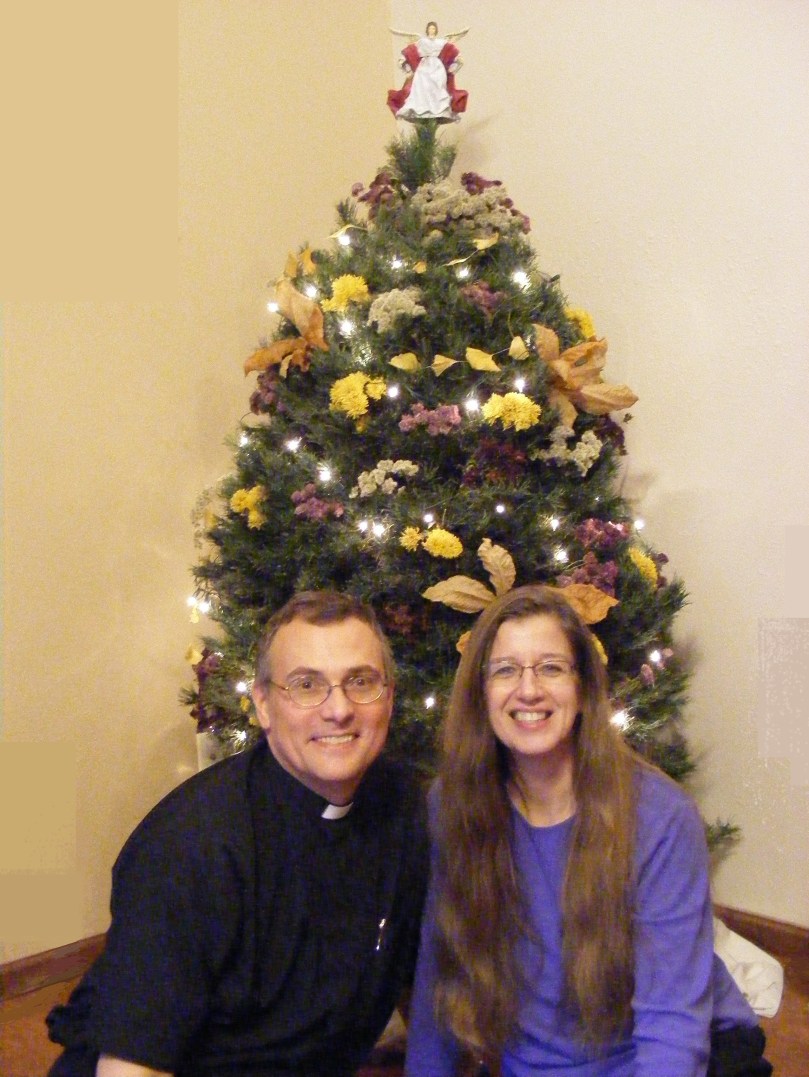 I’m adding a more personal post during the Christmas season to share a little about how our family celebrates. We put our tree up a little before Christmas and will keep it up through the twelve days of Christmas (December 25 through January 5). This year we used dried flowers and leaves for decorating. Here is a description of our tree, which was fun to put together.
 Yellow Flowers. We feel that the yellow mums really make the tree beautiful since they show up so well against the evergreen foliage and their color is a compliment to the purple mums. You can see them looking fairly fresh in Gretchen’s photo above. The dark purple mums are drier in the photo.
 church history review