The Scope and Purpose of Church History Review

Image courtesy of dan at FreeDigitalPhotos.net

Thanks to those who read and use Church History Review. About a year ago I began searching online for a comprehensive church history site that would engage amateur and professional church historians by offering resources for those doing research or teaching on global church history. Although there are some great sites available, I did not find the kind of site I was looking for so I decided to start a site of my own.

Scope of Content
Church History Review provides a comprehensive collection of links to sites about historic events, texts, and church life today so that readers may explore topics that interest them. The collection is focused on churches in the Trinitarian tradition such as Roman Catholic, Orthodox, Protestant, and modern Evangelical denominations, as well as independent groups and house churches that worship the Triune God. Recently, I greatly expanded the number of sites for denominational archives and I am always adding links to historical maps and infographics. Readers who discover valuable online resources that I have not yet included are welcome to contact me in the comments feature so that I can expand the site. My long-range goal is to create the most comprehensive and useful church history site on the web. Your contributions toward that goal would be greatly appreciated.

History in Real-Time
Nearly every day I see news reports on church life and I notice that they often lack the deep perspective of history, which helps us understand the place and importance of events in perspective. By gathering and commenting on stories, I am writing church history in “real-time” so I can prepare an annual summary. You can read my first year’s results on the page 2015 Global Events in Church History.

Preaching and Teaching Resources
Any church leader who uses illustrations or examples in their teaching and preaching will find a wealth of recent stories and resources on Church History Review to liven their sermons or bring discussion of current events into their classroom. The site includes a search feature just for this purpose. One can also click on the collection of tags (listed at right) to discover stories of interest.  The resource pages listed at the top of the site include links to maps, timelines, and other classroom tools. Explore, learn, and share!

In Christ,
Rev. Edward A. Engelbrecht, STM
Site Administrator

Christians in Iceland Don’t Believe God Created the World

Why are young Icelanders so different from young Americans?

CHR Comment: In a recent survey, all Icelanders under the age of 34 answered that they do not believe God created the world. However, a number of these same persons responded that they were Christians. The survey perhaps does not distinguish well between belief that God directly created with world, as described in Genesis, and God creating the world through theoretical processes such as the big bang and evolution. Nevertheless, the article describes the rapid secularization of Iceland and the equally rapid decline of the Lutheran state church in that nation.

Iceland is an exception globally as the percentage of religious persons below age 34 has actually risen worldwide.

Source: In this country, literally no young Christians believe that God created the Earth – The Washington Post

India: 12 Arrested for “Converting to Christianity”

Twelve people have been accused of converting to Christianity, arrested and put in jail in India, according to UCA news.

CHR Comment: Hindu activists surrounded a house in Dahar village, Madhya Pradesh, India. Inside were twelve persons suspected of converting to Christianity. In this region of India, it is illegal to convert without informing the government, which is run by conservative Hindus. Local police arrested the twelve people and took them to jail on January 14, 2016. They were later released on paying bail.

Shankar Singh, who spoke for those arrested, explained that they had not converted to Christianity and had gathered to observe a Hindu harvest festival that coincides with the transition of the sun into the zodiac sign of Capricorn (Makarsankrati). However, he added that the group had faith in Jesus, followed His teachings, and prayed to Him even though they had not joined any Christian church.

In regions where Christianity is new and in the minority, the issue of what makes for a genuine conversion is common. Augustine records an example of this same issue in his Confessions by relating the story of Victorinus, a famous Roman teacher of rhetoric who read Christian books. Victorinus confessed to his friend Simplicianus that he had become a Christian. But Simplicianus contended that he would not agree that Victorinus was a Christian until he saw him at church, to which Victorinus cleverly replied, “Then do walls make Christians?” (Confessions: A New Translation by Henry Chadwick [Oxford: Oxford University Press, 1992], 136). Victorinus was afraid to make a public confession of Christ due to the social pressures of the pagan society that surrounded him and celebrated his talents. A public conversion would bring down upon him the scorn of the dominant religious culture.

The followers of Jesus in Dahar village are having a similar experience. They have learned about Jesus and want to follow Him but know that formally converting to Christianity will have great personal costs. May the Lord help them and other Christians in the region work through these matters of conversion safely and sincerely. In closing, we may remember that Victorinus finally asked Simplicianus to take him to church where he received formal instruction in the Christian faith and Baptism.


Source: India: 12 arrested for ‘converting to Christianity’ | Christian News on Christian Today

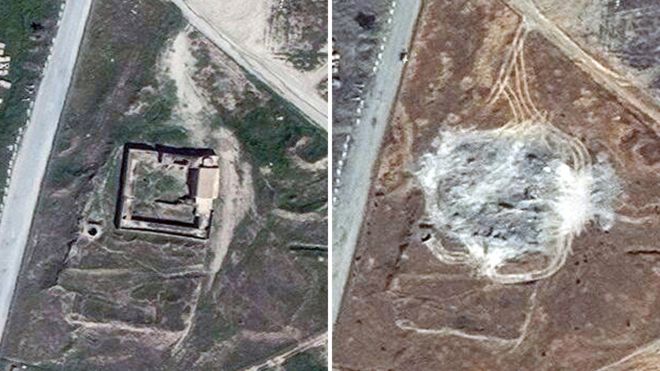
Iraq’s Oldest Christian Monastery Destroyed by Islamic State

Satellite images confirm the oldest Christian monastery in Iraq has been destroyed by the jihadist group Islamic State (IS).

CHR Comment: St. Elijah’s monastery was 1,400 years old. The article describes some features of its cultural significance, the martyrs there from 1743, and use of the monastery by military groups in recent fighting. The article is based on an interview with a Chaldean priest since the Chaldeans were the last Christian group associated with the site. None of the articles I saw included much information about St. Elijah himself. If a reader is aware of further information on this Syriac Christian leader, please share comments and/or a link.

This is yet another example of how ISIS practices vandalism in the name of religion, as though an unused site was somehow a threat to them.

Source: Iraq’s oldest Christian monastery destroyed by Islamic State – BBC News

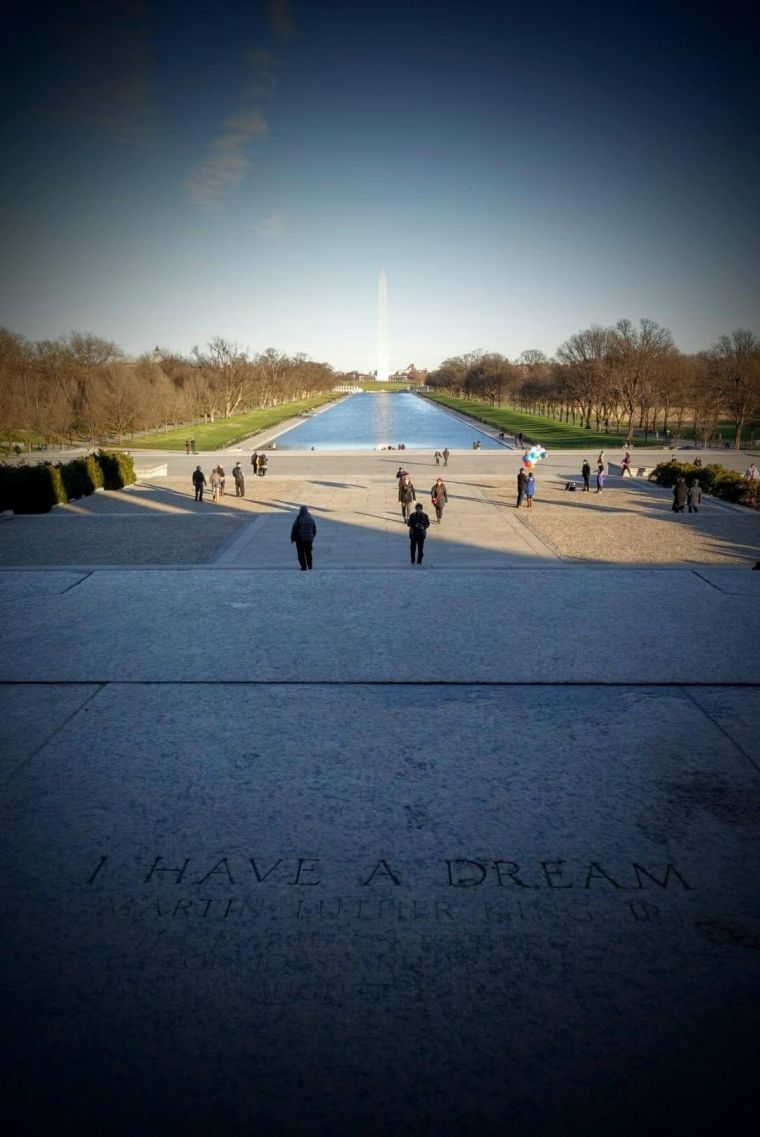
Martin Luther King Day: What His Unfulfilled Dream Has to Say to the Church

CHR Comment: Krish Kandiah provides his perspectives on the significance of King’s speech, noting that if King had not been shot, he would now be 86 years old. Kandiah helpfully describes some of King’s rhetoric, which draws deeply on biblical and American texts to make a compelling case for peace and freedom for people of every race. King’s dream remains as real as it is unfulfilled. Kandiah shows that this speech is inspirational not only to Americans but to persons around the world.

Source: Martin Luther King Day: What his unfulfilled Dream has to say to the Church | Christian News on Christian Today

Russians celebrate Epiphany by Diving into Freezing Waters

Thousands of Russians have taken a dip in the icy waters to celebrate Epiphany, a major holiday in Orthodox Christianity marking the birth and baptism of Jesus.

CHR Comment: Here’s another example of this Eastern Orthodox practice, which was described in an earlier Epiphany post. Somehow I don’t think this will catch on in the West.

Source: Russians celebrate Epiphany by diving into freezing waters – The Washington Post

American Missionary Among the Dead in Burkina Faso Siege

Michael James Riddering, who moved from Florida, worked at the Les Ailes de Refuge Orphanage, about 70 miles from Ouagadougou.

CHR Comment: The attack included a Cappuccino Café where missionaries had gathered for a meeting. It appears that the missionaries were not intended as targets but where caught up in the attack unintentionally.

Source: American Missionary Among the Dead in Burkina Faso Siege – The New York Times

Two Lutheran Seminaries to Close and Reopen as New School

(RNS) The new plan comes as mainline Protestant seminaries take steps to weather financial storms caused by an average drop in enrollments of nearly 24 percent since 2005.

CHR Comment: The seminaries were overstaffed, running deficits, and had a diminishing number of students. A joint committee quickly made the decision to restructure. Both institutions were seminaries of the ELCA which has suffered loss of membership in recent years due to changing teachings on human sexuality and other issues.

Source: Two Lutheran seminaries to close and reopen as new school – Religion News Service

Graffiti Sprayed on Jerusalem Church

Israeli police discovered Hebrew graffiti Sunday on the walls of a famous Jerusalem church, in what appears to be the latest vandalism attack by extremist Jews.

CHR Comment: The Dormitian Abbey had anti-Christian slogans and threats of violence painted on it. The article includes no confirmation that the vandals were Jews.

Update: Please see below the link to a more recent article about the incident, which shows that the vandalism and threats came from teenagers.

Source: Israeli police: Graffiti sprayed on Jerusalem church – The Washington Post

https://www.washingtonpost.com/world/middle_east/israeli-police-arrest-jewish-suspect-in-church-vandalism/2016/01/20/6cbc08e6-bf4b-11e5-98c8-7fab78677d51_story.html

What Is Happening in the Anglican Communion? Commentary on the Recent Suspension

The Anglican Communion suspended the Episcopal Church, it’s American branch, from voting and decision-making for three years on Thursday over its acceptance of same-sex marriage.

CHR Comment: What is happening in the Anglican Communion? Here is a long-view, historical explanation.

When the Anglican Church adopted its Thirty-Nine Articles of doctrine in 1563, it attempted to be both inclusive and exclusive. The articles were written in a form that embraced the conservative Reformation but spoke against the radicalism of the Anabaptists. The articles also distinguished the Anglican Church from the Romanism of the papacy.

The Lambeth Quadrilateral (1888) defined modern Anglicanism as a church, emphasizing inclusiveness and seeking union with other church bodies. Anglicanism went on to embrace and promote the most important theological movement of the twentieth century: ecumenism. Anglican inclusiveness looked for common ground between churches and deemphasized the differences. The result was that Anglicanism constantly played an important role in unifying, ecumenical events. Liberal inclusiveness became one of its most important values.

Ironically, that inclusiveness is now dividing the Anglican Communion. A majority of western Anglicans want to include homosexuals in church life without defining homosexual behavior as sinful or calling homosexuals to repentance. These Anglicans are acting in accord with their prevailing emphasis on inclusion as a virtue that overrides or overlooks longstanding Christian doctrine and practice. In contrast, Anglicans in the former British colonies of Africa and elsewhere are much more conservative theologically and morally. They are alarmed by the decisions of the Episcopal Church USA, which has redefined marriage. American Episcopalians are also undermining the unity and cooperation that Anglicans had achieved through the ecumenical movement since other Christian church bodies do not want to approve the marriage of homosexuals.

Which view of Anglican theology and identity will prevail? Only time will tell but an important factor to consider is the rapid growth of Anglican Churches in Africa and in other former colonies. The more conservative Anglicans resent the old “colonialism” of England and the “imperialism” of the U.S. As they grow in numbers while the English and American churches decline, the churches in the former colonies will likely become more and more influential in defining the future of their church body.

Source: Anglicans suspend Episcopal Church over stance on same-sex marriage