11 Facts You Might Not Know about Christmas Trees

From contentious early history to new scientific experiments, these facts will help you see this holiday fixture anew.

CHR Comment: The use of trees in Christmas celebrations first appeared in the medieval period in northern Europe, not during the era of the “Early Church” as the article states (the examples are from the Age of Orthodoxy after the Reformation). Christmas trees likely came from the customs of burning trees/logs during the darkest days of winter since the winter solstice falls near the time of Christmas (December 25). Although some church leaders opposed the use of the trees, others saw no harm in it. The second link, from the History Channel, provides further information.

Source: 11 Facts You Might Not Know About Christmas Trees | Mental Floss

http://www.history.com/topics/christmas/history-of-christmas-trees
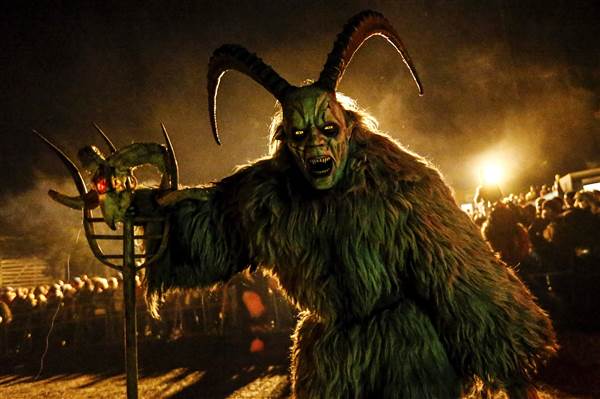
St. Nicholas for Nice Children; Krampus for Naughty

The integration of Syrian and Iraqi refugees in rural Austria is facing a terrifying challenge this holiday season.

CHR Comment: Sometime in the medieval era the Christian feast for St. Nicholas, a historical fourth century bishop, was mixed with pagan folklore about a humanlike beast that punished naughty children. This is the Austrian version of the “naughty or nice” element in modern Christmas celebrations. This a good example of syncretism in European Christianity.

Source: Austrian Villagers to Refugees: Please Don’t Fear Krampus – NBC News

Islamic State Describes Western and Eastern Nations as “Crusaders”

The information was released in Dabiq, the Islamic State’s online magazine.

CHR Comment: When ISIS took responsibility for bombing a Russian Metrojet that crashed in Sinai, they referred to western states and Russia as “divided Crusaders of the East and West.” This shows how they view the secularized nations as if they were Christian nations.

Source: Islamic State claims to kill 2 hostages; reveals photo of Russian bomb

Spanish Archbishop Sells Arawak Indian Slaves

A century ago, Christopher Columbus was considered the most glorious explorer in American history. Today, major cities are voting to eliminate the national holiday in his name. What happened?

Source: How did Christopher Columbus become so controversial? – CSMonitor.com

Columbus brought Indians to Europe as slaves, which a church leader in turn sold. How did churchmen get into the business of slavery, which had all but died out during the medieval period? (Serfdom has similarities to slavery but also important differences.) The fact that this happened in Spain, which most keenly felt Muslim influence during the medieval period, should not be overlooked.

The Crusades in Political Speech. Obama

This article Edward B. Driscoll, Jr. opened by taking Obama to task for criticizing the Crusades. The article continues by describing an eight-part video on the Crusades in The Western Story. A criticism one might provide is that the facts and perspective in the article are definitely western in perspective. The Byzantine and Eastern Christians saw things different as did, of course, the Muslims. Broadening the perspective would help.

The truth about the Crusades.

Jesus Went to Hell

This article describes some aspects of Christian belief about Christ’s descent into hell, which is of course in creeds widely recited in Christian worship. An aspect missing in the article is that although some Christians teach that Jesus descended into hell to suffer, others teach that Jesus descended into hell triumphantly to proclaim His victory over sin, death, and the power of the devil.

1 Peter 3:18-20

For Christ also suffered once for sins, the righteous for the unrighteous, that he might bring us to God, being put to death in the flesh but made alive in the spirit, in which he went and proclaimed to the spirits in prison . . .

Jesus Went to Hell, But Nobody Wants to Talk About It | Religion Dispatches.