
Their members weren’t allowed to have sex. No meat, no alcohol, no tobacco and no personal property, either. Yet to this day, people talk about how fun they were.
Source: Town remembers, fondly, celibate commune destroyed by sex scandal
Their members weren’t allowed to have sex. No meat, no alcohol, no tobacco and no personal property, either. Yet to this day, people talk about how fun they were.
Source: Town remembers, fondly, celibate commune destroyed by sex scandal
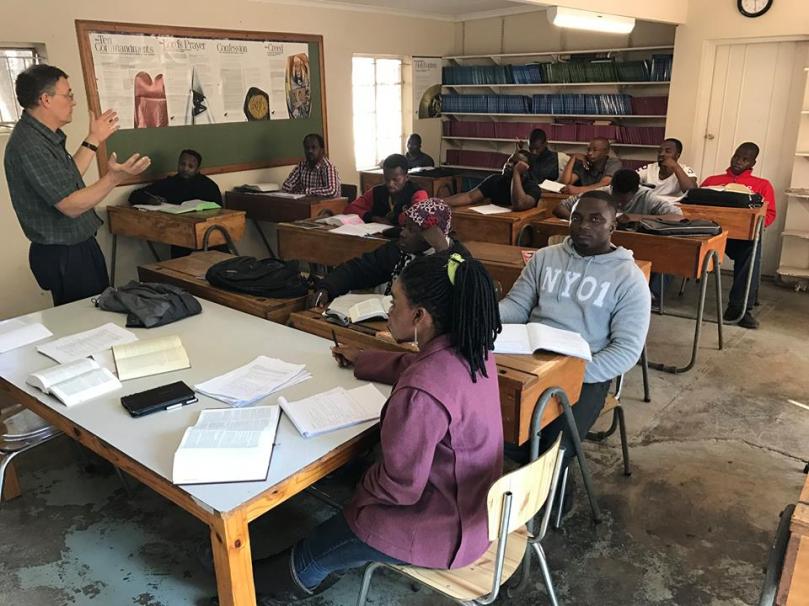 Greetings in Christ. I’m grateful to the many visitors on my site. This month I am catching up on news since I recently served as a guest lecturer in South Africa and I am beginning new service at a parish in Ohio. Please continue to share your thoughts and use the resources compiled here. Great to know that others share my interest in emerging church history and new discoveries about the past. I’m looking forward to writing a summary of church history from 2016.
Site Administrator Rev. Edward A. Engelbrecht, STM
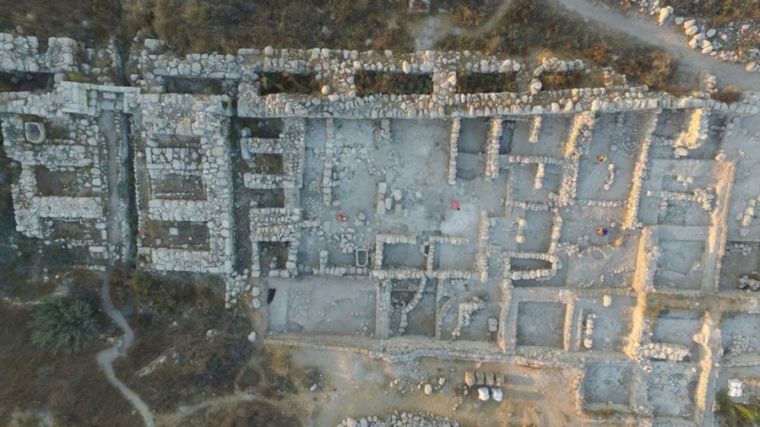
Solid evidence has once again been unearthed proving that passages from the Bible were based on actual historical events.
CHR Comment: Steve Ortiz, from the Tandy Museum of Southwestern Baptist Theological Seminary of Fort Worth, Texas is director of the excavation. The interpretation provided in the article will likely be disputed by other archaeologists.

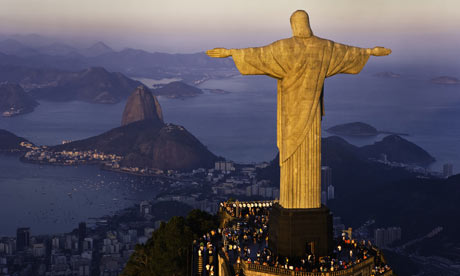
Our family is watching the Olympics and noticing how often athletes display the cross, either on a necklace or by making the sign of the cross as a gesture of prayer. For example, a Brazilian gymnast just finished his routine and then crossed himself in prayer. As you enjoy the Olympic competition, look for examples of the cross, which unites God’s people across the nations.
 Cappadocian Underground City from the article by Jennifer Pinkowski, National Geographic, March 26, 2015
I’ve added this summary to the main menu on the site so that it is readily available for those doing research. (See top of page.)
Antiochus IV Epiphanes built the Acra citadel during the time between the testaments (Acra is a Greek term meaning “highest point.”) The Romans likely buried the remains of the citadel when they destroyed Jerusalem in AD 70. The Israel Antiquities Authorities announced the rediscovery of the citadel under a Jerusalem parking lot (MSN, November 3, 2015).
Marine archaeologists discovered twenty-two shipwrecks in a seventeen square mile area around the Fourni Archipelago, which is in the eastern Aegean Sea (Nick Romeo, National Geographic, November 3, 2015). Twelve of the twenty-two wrecks date from the late Roman period (300–600 AD) when Christianity was ascendant or dominant in the Roman Empire. Excavations should yield new information about life in those times and perhaps also matters of faith.
Nevehir University geophysicists surveyed the caverns of an underground city in Cappadocia, Turkey. Workmen discovered entrances to the city in 2013 but archaeologists continue to work their way into the depths of the tunnel network, which may go down more than 370 feet into the earth. The recently discovered city may even be larger than the famous Derinkuyu city in the same region, which could house 20,000 people (Jennifer Pinkowski, National Geographic, March 26, 2015). Byzantine Christians created the city for protection against Muslim invaders who reached the region in the late eighth century.
Historian Ian Friel discovered the wreck of a ship while studying an aerial photograph of the Hampshire River in England (BBC, October 12, 2015). He identifies the wreck as the Holigost, one of four war ships commissioned by Henry V (1387–1422). By naming the ship after the third person of the Holy Trinity, the medieval Englishmen illustrated how fully the Christian faith was integrated into medieval life and their understanding of war.
The remains of four Jamestown men were discovered in 2010 buried beneath the chancel of the oldest discovered church in a North American English colony. Records indicate the church was built in 1608. Analysis has now identified the remains of Rev. Robert Hunt, the first chaplain of the Jamestown colony (Kristin Romey, National Geographic, December 28, 2015). Archaeologists are currently rebuilding the historic structure (Newser, April 29, 2015).
In fall of 2014, Jeffrey Alan Miller of Montclair State University was searching the archives at Sidney Sussex College in Cambridge, England, when he found a notebook labelled as a biblical commentary (Beatrice Gitau, Christian Science Monitor, October 15, 2015). After considerable study, Miller has concluded that the notebook is actually the earliest known draft of the King James Bible first published in 1611. The notebook shows how contributors worked on the famous and most influential English translation of the Bible.
In order to make way for a rail line, archaeologists in London began excavating the Bedlam cemetery in London, which holds some 3,000 burials (Suzanne Plunkett, Reuters, March 10, 2015). Among those buried are persons who died from plague during the Reformation Era and Levellers from the English Civil War, who urged religious toleration. Archaeologists will study their remains.
The famous author of Don Quixote was buried in the Convent of the Barefoot Trinitarians in Madrid according to Fernando de Prado and Francisco Etexberria (Rowena Lindsay, Christian Science Monitor, March 17, 2015). Cervantes sought burial in the monastery since the Barefoot Trinitarians helped free his from pirates in 1575.
Just before the 100th anniversary of the Armenian Genocide, the Vatican library released documents from its archive of the Congregation of the Eastern Churches, which includes correspondence from Vatican officials and Eastern Christian officials that describe the killing of 1.5 million Armenians by the Turks (Andrea Gagliarducci, Catholic News Agency, March 20, 2015). Vatican correspondence regarding the sinking of Lusitania (1915) was also released (Andrea Gagliarducci, Catholic News Agency, March 10, 2015). Additionally, the Vatican received a ransom demand for two documents by Michelangelo that were stolen in 1997 (Guardian, March 8, 2015). One of the documents was a letter signed by the Renaissance genius. Other details about the documents were not released.
2015 also yielded some important discoveries in biblical archaeology. The following link will take you to the Christianity Today summary.
Nothing says America like a giant religious tourist attraction that spurs debate and makes money.
CHR Comment: A helpful description of expected visitors and financial aspects of the Noah’s Ark exhibit.
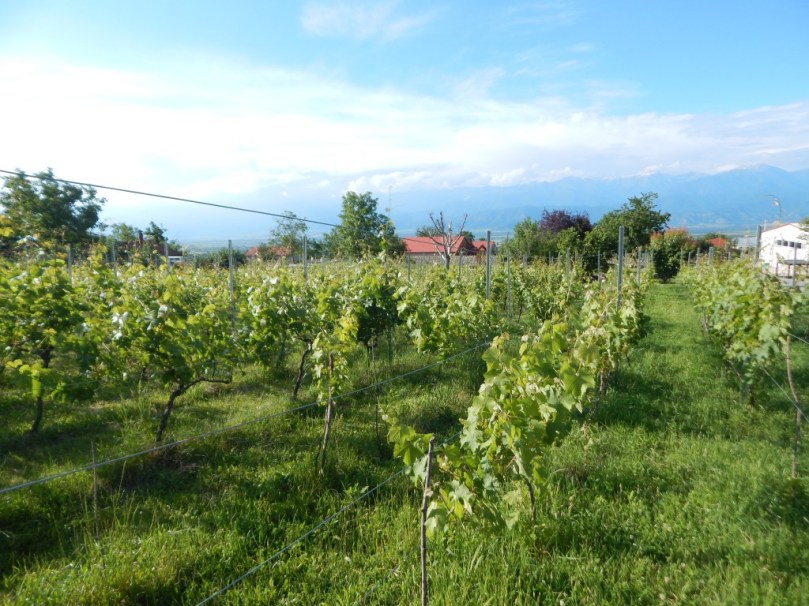 Science and sipping: learning firsthand about qvevri, a millennia-old style of making wine in the Republic of Georgia.
CHR Comment: The article describes research into the long history of wine making, tracing practices to the region of Georgia in western Asia. This caught my attention due to the earliest biblical account of wine making (Genesis 9), which appears to be associated with the same region. The last geographic region associated with Noah is the “mountains of Ararat” (Genesis 8:4), after which Noah is described as cultivating grapes, making wine, and getting drunk. The mountains of Ararat are just south of the Republic of Georgia and central to the evidence about earliest wine making. Fascinating that the biblical testimony and the archaeological evidence suggest such closely related origins for viticulture.
Source: Was Georgia the Cradle of Wine? Who Cares, Let’s Drink! – Dead Things : Dead Things
 Two Christian artists have filed a pre-enforcement lawsuit against Phoenix City in Arizona, asking the court to declare its anti-discrimination law as unconstitutional and violative of their religious beliefs on marriage.
CHR Comment: Yet another type of business affected by the changes to marriage laws and the existing non-discrimination laws.
The wording of the First Commandment in Luther’s Catechisms may, at first, feel a bid strange: “You shall have no other gods” (Exodus 20:3). How does one have a god? Such wording seems to imply that there are indeed other gods beside the one true God.
First, we must recognize that the wording in the catechism is an abbreviated form of the commandment, which actually runs another three verses. (In the Reformed and Eastern Orthodox traditions, the verses are divided into two commandments.) Using an abbreviated form was a medieval practice that made memorization easier. For the catechism, Luther built on this practice but included more of the text (Exodus 20:5–6) as a summary or “close” of the commandments. Here is the full statement of the commandment from Exodus:
You shall have no other gods before me. You shall not make for yourself a carved image, or any likeness of anything that is in heaven above, or that is in the earth beneath, or that is in the water under the earth. You shall not bow down to them or serve them, for I the Lord your God am a jealous God, visiting the iniquity of the fathers on the children to the third and the fourth generation of those who hate me, but showing steadfast love to thousands of those who love me and keep my commandments.
We see then that the Lord forbids His people to have or make gods/idols before which they would bow down or serve (cf. Exodus 32). To understand the word “have,” consider the following expressions: I have a family; I have a father; we have a president. The word “have” does not mean simple possession of something. It describes a relationship—a bond—between persons or things. The Creator will not allow His creation to set up objects or barriers between Him and His people. As He said it positively and emphatically in the opening to the Ten Commandments:
I am the Lord your God . . .
Now that He has freed Israel from the bondage of Egypt, He will not let them return to bondage by serving other gods or masters. This truth is foundational, not only to biblical/Christian faith, but also to western ideals of the freedom and value of the individual. Each human being is loved by God and, as a created being, has a direct relationship with the Creator.
The First Commandment, “You shall have no other gods,” seems to imply that other gods are real and that one can have a relationship with them. One may rightly ask, is this true?
The Bible consistently speaks against the idea that the figures of idols are true gods. Perhaps the best example of this is the prophet Isaiah’s satire of a person carving an idol from a block of wood (Isaiah 44:9–20) and then using the wood trimming to warm his room and bake his bread—an excellent example of humor in the Bible!
But seriously, those who worship idols usually regard them as representations or manifestations of spiritual realities. In fact, archaeologists now believe that a bull calf idol of the ancient Near East actually represented the mount or throne for the god (typically Baal) who stood upon it. So, the idolaters were really directing their devotion beyond the wood, stone, gold, or silver that stood in front of them. The idol was a way to reach beyond and to “have” a connection to the god it represented. Modern religions that use idols have a similar understanding.
The apostle Paul strongly warns against idolatry and sacrifices to idols when he writes: “I imply that what pagans sacrifice they offer to demons and not to God. I do not want you to be participants with demons” (1 Corinthians 10:20; cf also Revelation 9:20). The biblical view then is that there are indeed spiritual realities—demons/false gods—standing behind idolatrous and false worship. So false worship can in no way honor the one true God.
In the First Commandment God is delivering something like an ultimatum to us: you will have Me as God or you will have some other god, you can’t have both. To this He attaches a warning and a promise: (1) as the only true God, He will punish those who hate Him (Exodus 20:5) but (2) He will likewise show steadfast love to those who love Him and heed His word (20:6).
 church history review