
1. 11.2017
Islamic extremism now has a rival, according to 2017 World Watch List.
CHR Comment: Islamic extremism and ethnic nationalism pose the greatest threats to Christians according to this report.
1. 11.2017
Islamic extremism now has a rival, according to 2017 World Watch List.
CHR Comment: Islamic extremism and ethnic nationalism pose the greatest threats to Christians according to this report.

1.9.2017
The Church Society\’s Lee Gatiss reflects on the life and sudden death of his long-term friend and mentor, Oak Hill principal Mike Ovey.

1.6.2017
Allen Guelzo observes in his history of the Reformed Episcopal Church that historians of American Episcopalianism are misled by Anglo-Catholicism’s success in establishing “their own vision […]
CHR Comment: The review contrasts the views of Evangelicalism and Anglo-Catholicism within the Episcopal Church.
Source: Irony of Episcopal History
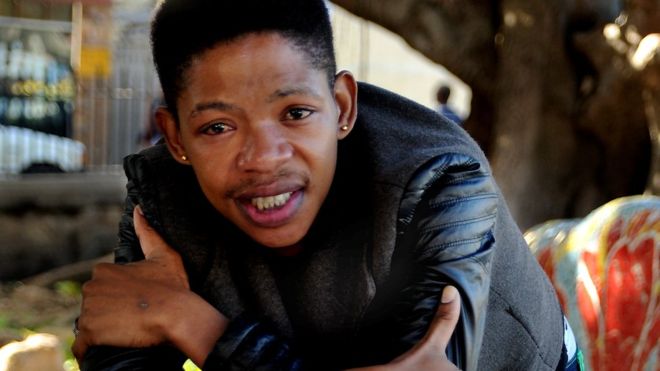 President Zuma leads tributes to the young South African star who made gospel music popular.
1.27.2017
CHR Comment: Gospel music has gained a broad audience in South Africa so that even the nation’s president paid tribute to this performer after his death.
Source: Lundi Tyamara: South African gospel star dies aged 38 – BBC News
 One of the skeletons buried in the leprosy cemetery in Winchester appears to have been a pilgrim.
1.26.2017
CHR Comment: The spread of leprosy preceded the crusades. Europeans may have contracted the disease while on pilgrimage to the Holy Land and brought it back to western Europe.
Source: Leprosy: Medieval pilgrim burial sheds light on how disease spread
 For two years, Ismail and his mother, Jandar Nasi, were captives of the Islamic State
1.26.2017
CHR Comment: These Christians are Chaldean, from the ancient Syriac speaking church. They showed remarkable bravery during persecution.
Source: How an Iraqi Christian teen survived two years in ISIL ‘caliphate’
 A large Viking manor has been found near the ancient town of Birka in Lake Mälaren.
1.20.2017
CHR Comment: Birka was the location of the earliest church (AD 831), a site from which further mission work spread. The community also traded with Byzantine Christians.
Source: Spectacular Viking manor discovered near Birka – The Local
The remains of at least 123 people have been excavated at a series of four cemeteries near the ruins of a medieval Christian monastery in Sudan.
1.20.2017
CHR Comment: Burials dated as early as the fourth century and were for monks as well as for common people. Christian inscriptions were in both Greek and Coptic languages.
Source: Massive Burial Ground Unearthed at Medieval Monastery in Sudan
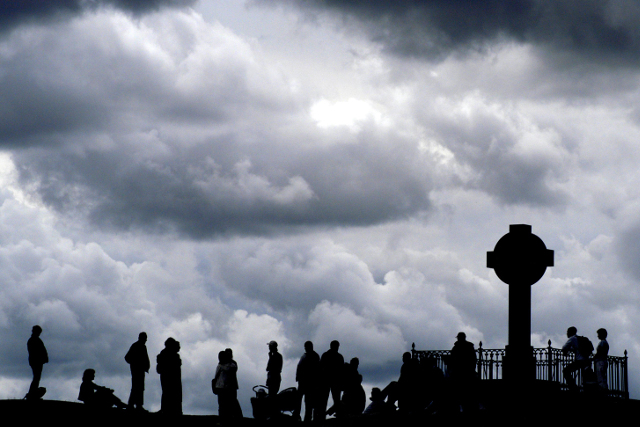
The long list of participants also included leaders from the Catholic, Greek Orthodox, Jewish, Mormon, Muslim, Sikh, Buddhist, Bahá’í faiths and opened with a Navajo blessing.
1.20.2017
CHR Comment: The article describes the history of the service, going back to President Washington. In recent times, the service in no longer specifically Christian but includes prayers from various faiths, invoking various gods.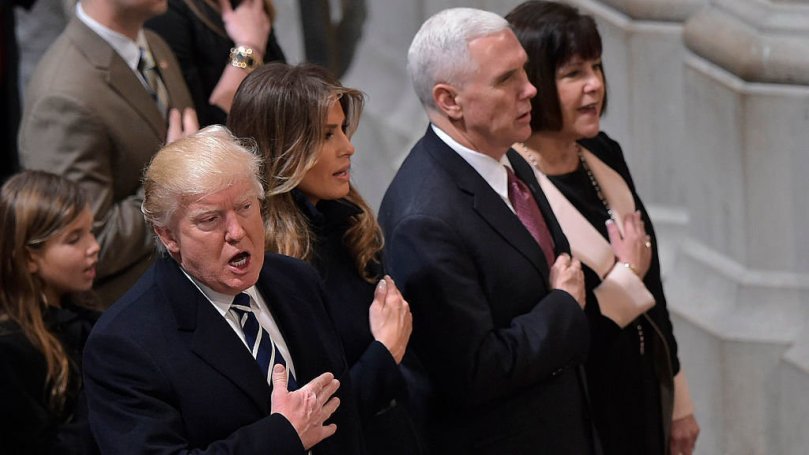
Book Review Comments
John J. McKay’s Discovering the Mammoth: A Tale of Giants, Unicorns, Ivory, and the Birth of a New Science (New York: Pegasus Books Ltd., 2017) describes the history of paleontology by tracing the history of the discovery of mammoth bones. The first part of the book provides some references to ancient and medieval Christian views and many connections to early modern, Christian views of giants, unicorns, and the biblical flood as people discovered the bones of large animals and tried to make sense of them. Mammoth bones were often associated with giants (cf. Genesis 6) and unicorns (as per the King James Bible translation and other resources). German scientists were especially involved in the modern period as they had greater access to Russia and Siberia.
The book is fun to read. However, the text has so many typos, one wonders what editorial process was used. Many of these typos should have been noticed by an alert reader. Perhaps the editors used some software based process that sped up work but in the end did not achieve the best results.

 church history review