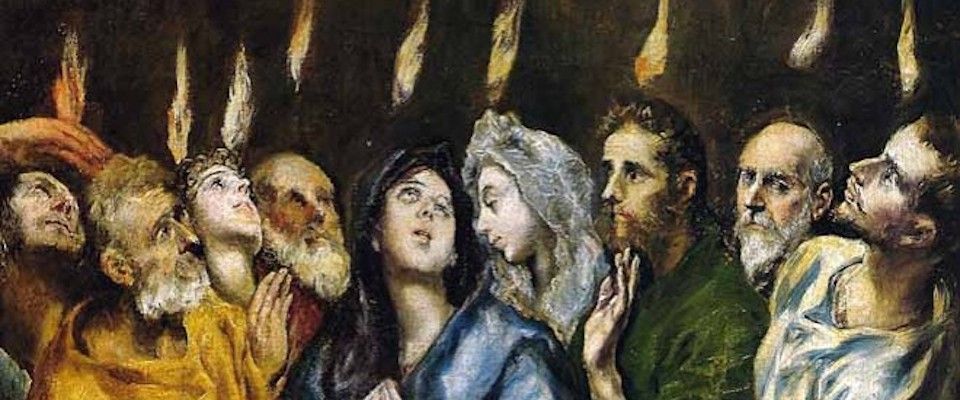
Revival Results in Millions of New Iranian Believers?

A great revival is going on inside the Islamic Republic of Iran, Christian believers who have planted an “Internet church” in that heavily restricted Middle East country have disclosed.

CHR Comment: This is an exciting and interesting account. However, readers must take note that the only source is an interview on the Christian Broadcasting Network. The account and its figures need verification. One wonders how the large figures were reached. For example, the 2014 New York Times article below gives much different figures.

Source: Holy Spirit over Iran: Revival results in 3 million new believers today from just 100,000 in ’94 | Christian News on Christian Today

What is the Mission of the Church?

On the scope of the church’s mission.

CHR Comment: Peter J. Leithart offers an interesting and helpful theological review of Kevin DeYoung and Greg Gilbert’s book, “What is the Mission of the Church?” Along with Leithart’s comments, one does well to see that DeYoung and Gilbert raise an important question for the modern church.

Historically we see that when churches become focused on social justice and ecumenism, they tend to lose focus on evangelistic mission work. Their efforts and energy make them more and more like secular aid societies—which can be great and wonderful things—but they lose interest in Jesus’ goal (and the Spirit’s goal) for making disciples. This is perhaps best illustrated by the increasing emphasis on interfaith dialogues and interfaith worship services where Christians and non-Christians profess a belief in the same God while describing God in obviously different ways or by their efforts to redefine God. The mission in these cases becomes peace with other religions and even an express desire to end mission work. See, for example, the article page in the link below about “Interfaith Relations Deemed More Important than Mission Work.”

Source: Double Mission | Peter J. Leithart | First Things

https://churchhistoryreview.org/2015/10/20/interfaith-relations-deemed-more-important-than-mission-work-modern-church/

Zimbabwe Pastor Evan Mawarire

Evan Mawarire has become a national hero but said he has to “rethink” his return to the country after Mugabe named him and questioned whether he is serving God.

CHR Comment: Pastor Mawarire’s social media based protest raised questions about how involved ministers and Christians should become in political protest. Mawarire defends his actions by pointing out the need to denounce injustice.

Source: #ThisFlag Pastor Evan Mawarire: ‘I am not abandoning Zimbabwe’ | Christian News on Christian Today

Islamists Attack French Church, Slit Priest’s Throat

CHR Comment: The dramatic murder of Father Jacques Hamel at Saint-Etienne-du-Rouvray in France while he was finishing mass illustrates the senseless brutality of ISIS inspired “soldiers.” Remarkably, the terrorists chose as their target an 84-year old man. The terrorism experienced by so many Near Eastern Christians continues to crop up in Europe and North America in 2016, illustrating desperate measures by devotees of the declining Islamic State. Father Hamel is rightly remembered as a martyr of the Christian Faith. Lord, have mercy.

I’ve added a more recent article below, which includes further information about the attack. And now a third article about ISIS.

Source: Islamists attack French church, slit priest’s throat | Reuters

http://www.usatoday.com/story/news/world/2016/07/28/france-church-attacker-islamic-state-priest-nuns/87651244/

http://www.usatoday.com/story/news/world/2016/07/27/islamic-state-losing-territory/87645316/


Christianity in Georgia

This ancient Christian country coveted by major powers is showing the world how a nation can survive by never relenting in its defence of its faith.

CHR Comment: The article describes the on-going influence and value of the Christian heritage of Georgia, which dates back to the fourth century. The article notes the suffering imposed by Muslims in the medieval era and by Soviets in the modern era.

Source: Christianity is this ancient country’s key to survival: Where people defend their faith ‘to the last drop of blood’ | Christian News on Christian Today

Tim Kaine, Devout Catholic

The Virginia senator, who previously served as mayor of Richmond, talks with the Monitor about how his faith shapes his politics – and motivates him to address social and racial injustice.

CHR Comment: Two articles about the religious views of Vice Presidential nominee, Tim Kaine. Kaine represents many values appreciated by American Catholics while also distinguishing his personal views about right and wrong from those passed into law (e.g., on topics such as abortion and gay marriage). Like Methodist Hilary Clinton, Kaine emphasizes social justice.

Source: Clinton picks Tim Kaine, devout Catholic and bridge-builder (+video) – CSMonitor.com

http://religionnews.com/2016/07/22/5-faith-facts-about-tim-kaine-i-do-what-i-do-for-spiritual-reasons/

Cyprus Restores Derelict Churches, Mosques

Seyfi Tunelci long watched in sorrow as the derelict Orthodox Christian monastery at Myrtou in Cyprus’ overwhelmingly Muslim north crumbled before his eyes. Now he’s part of an island-wide team toiling to repair the medieval building and dozens of other Christian and Muslim sites that fell into ruin during decades of ethnic division.

CHR Comment: Sites range from as early as the fifth century. 120 total sites are to be restored with European Union funds. The sites include significant art work that would be lost if repairs were not made. The sites are crumbling due to neglect since the division of the island into north (Muslim) and south (Christian) areas.

Source: Rebuilding peace: Cyprus restores derelict churches, mosques – The Washington Post

2015 Archaeology and Research on Christianity

2_460973824cappadocia_adapt_1190_1Cappadocian Underground City from the article by Jennifer Pinkowski, National Geographic, March 26, 2015

I’ve added this summary to the main menu on the site so that it is readily available for those doing research. (See top of page.)

Acra Discovered in Jerusalem

Antiochus IV Epiphanes built the Acra citadel during the time between the testaments (Acra is a Greek term meaning “highest point.”) The Romans likely buried the remains of the citadel when they destroyed Jerusalem in AD 70. The Israel Antiquities Authorities announced the rediscovery of the citadel under a Jerusalem parking lot (MSN, November 3, 2015).

Ancient Greek Shipwrecks

Marine archaeologists discovered twenty-two shipwrecks in a seventeen square mile area around the Fourni Archipelago, which is in the eastern Aegean Sea (Nick Romeo, National Geographic, November 3, 2015). Twelve of the twenty-two wrecks date from the late Roman period (300–600 AD) when Christianity was ascendant or dominant in the Roman Empire. Excavations should yield new information about life in those times and perhaps also matters of faith.

Cappadocian Underground City

Nevehir University geophysicists surveyed the caverns of an underground city in Cappadocia, Turkey. Workmen discovered entrances to the city in 2013 but archaeologists continue to work their way into the depths of the tunnel network, which may go down more than 370 feet into the earth. The recently discovered city may even be larger than the famous Derinkuyu city in the same region, which could house 20,000 people (Jennifer Pinkowski, National Geographic, March 26, 2015). Byzantine Christians created the city for protection against Muslim invaders who reached the region in the late eighth century.

Holigost Ship of Henry V

Historian Ian Friel discovered the wreck of a ship while studying an aerial photograph of the Hampshire River in England (BBC, October 12, 2015). He identifies the wreck as the Holigost, one of four war ships commissioned by Henry V (1387–1422). By naming the ship after the third person of the Holy Trinity, the medieval Englishmen illustrated how fully the Christian faith was integrated into medieval life and their understanding of war.

Jamestown Church Reconstruction

The remains of four Jamestown men were discovered in 2010 buried beneath the chancel of the oldest discovered church in a North American English colony. Records indicate the church was built in 1608. Analysis has now identified the remains of Rev. Robert Hunt, the first chaplain of the Jamestown colony (Kristin Romey, National Geographic, December 28, 2015). Archaeologists are currently rebuilding the historic structure (Newser, April 29, 2015).

King James Book Draft Discovered

In fall of 2014, Jeffrey Alan Miller of Montclair State University was searching the archives at Sidney Sussex College in Cambridge, England, when he found a notebook labelled as a biblical commentary (Beatrice Gitau, Christian Science Monitor, October 15, 2015). After considerable study, Miller has concluded that the notebook is actually the earliest known draft of the King James Bible first published in 1611. The notebook shows how contributors worked on the famous and most influential English translation of the Bible.

London Cemetery

In order to make way for a rail line, archaeologists in London began excavating the Bedlam cemetery in London, which holds some 3,000 burials (Suzanne Plunkett, Reuters, March 10, 2015). Among those buried are persons who died from plague during the Reformation Era and Levellers from the English Civil War, who urged religious toleration. Archaeologists will study their remains.

Remains of Miguel de Cervantes

The famous author of Don Quixote was buried in the Convent of the Barefoot Trinitarians in Madrid according to Fernando de Prado and Francisco Etexberria (Rowena Lindsay, Christian Science Monitor, March 17, 2015). Cervantes sought burial in the monastery since the Barefoot Trinitarians helped free his from pirates in 1575.

Vatican Archives Releases Historic Documents

Just before the 100th anniversary of the Armenian Genocide, the Vatican library released documents from its archive of the Congregation of the Eastern Churches, which includes correspondence from Vatican officials and Eastern Christian officials that describe the killing of 1.5 million Armenians by the Turks (Andrea Gagliarducci, Catholic News Agency, March 20, 2015). Vatican correspondence regarding the sinking of Lusitania (1915) was also released (Andrea Gagliarducci, Catholic News Agency, March 10, 2015). Additionally, the Vatican received a ransom demand for two documents by Michelangelo that were stolen in 1997 (Guardian, March 8, 2015). One of the documents was a letter signed by the Renaissance genius. Other details about the documents were not released.

Bonus

2015 also yielded some important discoveries in biblical archaeology. The following link will take you to the Christianity Today summary.

http://www.christianitytoday.com/ct/2015/december-web-only/biblical-archaeologys-top-ten-discoveries-of-2015.html